
2.
“Something
about her mouth touched it off, a quirk made the curves change as if she got a
sexual thrill, and her mascaraed eyelashes fluttered.”
3.
“You know what? Derek and I like each
other and if you have a problem with that, then screw you.”
–Sarah Saved the Last Dance
4. What would the world be like if
there were no mixed races? How many people would be non-existent in your life
if that were the case?
5.
“Whenever I passed the white women
looked at me, some curiously, some coyly, some with open hostility.”
6.
“‘That book proved to
me that the intermingling of the races in sexual relationship was sapping the
vitality of the Negro race and, in fact, was slowly but surely exterminating
the race. It demonstrated that the fourth generation of the children born of
intermarrying mulattoes were invariably sterile or woefully lacking in vital
force. It asserted that only in the most rare instances were children born of
this fourth generation and in no case did such children reach maturity.’”
7.
“‘If miscegenation is
in reality destroying us, dedicate your soul to the work of separating the
white and colored races. Do not let them intermingle. Erect moral barriers to
separate them. If you fail in this, make the separation physical; lead our
people forth from this accursed land. Do this and I shall not have died in
vain.’”
8.
“‘Every half-breed, or for that, every person having a tinge
of Negro blood, the white people cast off. We receive the cast off with open
arms and he comes to us with his devitalizing power. Thus, the white man was
slowly exterminating us and our total extinction was but a short period of time
distant.”’
9.
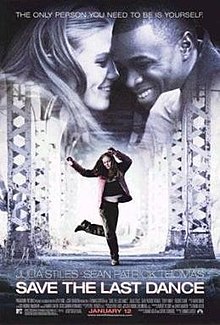
10.
Miscegenation
In 1965 my parents broke two laws of Mississippi;
they went to Ohio to marry, returned to Mississippi.
They crossed the river into Cincinnati, a city whose name
begins with a sound like sin, the sound of wrong - mis in Mississippi.
A year later they moved to Canada, followed a route the same
as slaves, the train slicing the white glaze of winter, leaving Mississippi.
Faulkner's Joe Christmas was born in winter, like Jesus, given his name
for the day he was left at the orphanage, his race unknown in Mississippi.
My father was reading War and Peace when he gave me my name.
I was born near Easter, 1966, in Mississippi.
When I turned 33 my father said, It's your Jesus year - you're the same
age he was when he died. It was spring, the hills green in Mississippi.
I know more than Joe Christmas did. Natasha is a Russian name -
though I'm not; it means Christmas child, even in Mississippi.
In 1965 my parents broke two laws of Mississippi;
they went to Ohio to marry, returned to Mississippi.
They crossed the river into Cincinnati, a city whose name
begins with a sound like sin, the sound of wrong - mis in Mississippi.
A year later they moved to Canada, followed a route the same
as slaves, the train slicing the white glaze of winter, leaving Mississippi.
Faulkner's Joe Christmas was born in winter, like Jesus, given his name
for the day he was left at the orphanage, his race unknown in Mississippi.
My father was reading War and Peace when he gave me my name.
I was born near Easter, 1966, in Mississippi.
When I turned 33 my father said, It's your Jesus year - you're the same
age he was when he died. It was spring, the hills green in Mississippi.
I know more than Joe Christmas did. Natasha is a Russian name -
though I'm not; it means Christmas child, even in Mississippi.
11.
“My
first step was to solemnly pledge God to never marry a mulatto man. My next
resolve was to part in every honorable way all courting couples of mulatto
people that I could. My other and greatest task was to persuade the evil women
of my race to cease their criminal conduct with white men and I went about
pleading with them upon my knees to desist. I pointed out that such a course
was wrong before God and was rapidly destroying the Negro race”
12.
“I
had to choose between you and my race.”
13.
“No
matter what the white folks did to me, or made me do just in order to live,
Alice and I could have a life of our own, inside of all the pressure, away from
it, separate from it, that no white person could ever touch.”
14.
“If
miscegenation is in reality destroying us, dedicate your soul to the work of
separating the white and colored races. Do not let them intermingle.”
15.

Without Miscegenation I wouldn't be here today <3
16.
Miscegenation is a mixture between people of
different racial backgrounds. Although the fear of Miscegenation was predominately
seen in the mixture of African American’s and White American’s there are
various other ethnicity mixes that developed fear of mixing races. Throughout
the course of our readings I have grappled with the issue of not loving someone
for who they are and can’t even fully imagine how things were back before the mid
21st century.
Attributions
1.
Publisher: Bromley and Co.
2.
Chester
Himes If He Hollers Let Him Go (19)
3.
Save
The Last Dance –Sarah
4.
Atalia
Jones
5.
Chester
Himes If He Hollers Let Him Go (18)
6.
Imperium
In Imperio 84
7.
Imperium
In Imperio 85
8.
Imperium
In Imperio 84
9.
Save
The Last Dance
10. Natasha Trethewey's
11. Imperium in Imperio 84
12. Imperium in Imperio 85
13. Chester Himes If He Hollers
Let Him Go 169
14. Imperium in Imperio 85
15. Atalia Jones
16. Atalia Jones
Personal
Statement
My
inspiration to construct a mash-up focusing on miscegenation derived from my
ethnic background paralleling to the definition itself. As we discuss into
further texts the concept of being mulatto seems to structure significantly
throughout various texts. Being that the term “mulatto” stems from
miscegenation I felt it would be interesting to explore the theme that is so
commonly exemplified. As I used Google to find images I came across the “Miscegenation
Ball of 1864” which in all reality did not happen but I found this picture to
be the most interesting because it depicts a reverse meaning of what the fear
of miscegenation was back then. Primarily miscegenation was the fear of
intermingling of the black and the white but more specifically the black man
and white women. This picture illustrates the exact opposite showing the white
men and black woman which could maybe symbolize the slave masters and their
slaves. I also included a poem by Natasha Tretheway which goes forth to explore
the illegal experiences her parents faced marrying outside of Mississippi since
miscegenation was not allowed. Her
mother was black and her father white. The second law that was broken was
Natasha herself as she was of mixed blood and often mistaken for just white.
The significance of this poem focuses on her inability to fully understand her
background, not knowing which side to identify as. Natasha’s comparison to Faulkner’s
Joe Christmas occurs because he too was of mixed races and had difficulty
identifying himself because he was stripped from his ancestry. I enjoyed this poem because I can relate to
how Natasha grew up. Similar to her my skin was light and I could pass for
white. Also because my skin was so light I did not really understand for the
longest the difference between being white and black. I knew my dad was black
and my mom was white but the logistics didn’t matter to me until I started to
get picked on in school and called redbone, white girl, yellow skin, and
light-bright.

No comments:
Post a Comment