Tuesday, July 17, 2012

Blog Post on Parable of the Sower


The idea of Earthseed incorporates various aspects that fully construct its meaning and purpose. Earthseed is an idea that everything is changing, and with this change comes a societal acceptance of it. Butler argues the messiness of change taking into account the reality of coming to terms with the world when she states, “Embrace Diversity. Unite—or be divided, robbed, ruled, killed. By those who see you as prey. Embrace diversity or be destroyed” (Butler 196). Butler calls to attention the potential of drastic violence, questioning the ability for unity transformation of diversity to occur. Embracing diversity stems not only within races but diversity in social class as well. In order for change to occur, Earthseed consists of power, survival, unity, and diversity, all of which structure the ability to accept what has happened and move forward. Deep rooted in the meaning of Earthseed, Lauren suggests that a seed is to be taken from earth along with the knowledge that people have to go beyond what earth has to offer when she mentions, “The destiny of Earthseed is to take root among the stars” (84). Instead of trying to fix what has gone wrong within earth the easy way out is to escape reality instead of changing. This idea of Earthseed being change is merely that change derives to accept Earth as home by not straying from reality in order to create a utopia. Although change occurs as a part of life, Lauren argues that change has yet to begin when she states, “Change is part of life, of existence, of common wisdom. But I don’t believe we’re dealing with all that that means. We haven’t even begun to deal with it” (26). The idea of denial stands strong within society as not being able to move forward and alter the structure that has led to such a destructive time period. Everyone wants change, yet no one persist to make a difference. Earthseed’s main focus lies within the present and the future and most importantly within our ability to move forward. Power stands as a significance in Earthseed as Lauren becomes the brains of the community striving for others to follow her lead on this journey of change. Her need to be prepared for the worst while bringing out the best serves as a focal point that allows for change to occur. With preparation she educates others along her journey up North, easily trusting people that she meets along the way. Lauren withholds a strong belief in unity and trust in which she has been inspired by her father to have a tightknit community that can work together in order to continue change and the development of Earthseed. Aligned together comes the fight for survival to create earthseed, trusting in yourself and others in order to generate a change for the better. Another significance of Earthseed suggests that if things don’t change, history will repeat itself.  In an Academic Journal entitled “All that you touch you change”, Patricia Melzer goes forth explore Butler’s intent to incorporate the religion of Earthseed in Parable of the Sower stating that, “The main message of Earthseed is that God is Change, and that change is consistent. Humans, through their actions, shape God” (Melzer). The ability to change the way in which you act as well as others will aid to shape God and the evolution of the world.  Melzer also goes forth to discuss the importance of fixing the challenges that are currently occurring in order to prevent a massive destruction from transpiring in the future, “Butler emphasizes that the embracing of difference does not only enhance the quality of human interactions, but that it is an act of survival and of necessity if humankind wants to end conditions of hate and violence”(Melzer). Diversity stands as a whole significance of what Earthseed permits suggesting that society needs to depend on each other in order to break the cycle of repeating human history.


Acorn Earth Image: http://earthseed.org/

Melzer, Patricia. “All that you touch you change”: Utopian Desire and the Concept of Change in Octavia Butler's Parable of the Sower and Parable of the Talents. 2002: 1-31. 17 July 2012.


Monday, July 16, 2012

Parable of the Sower Tutorial

Atalia’s Reading Tutorial 

           The passages I would like the class to discuss today 
           include:

1.    "Change is part of life, of existence, of common wisdom. But I don't believe we're dealing with all that means. We haven't even begun to deal with it" (Butler 26).
2.    "I am earthseed. Anyone can be. Someday, I think there will be a lot of us. And I think we'll have to seed ourselves father and father than this dying place" (Butler 78).

3.     "If hyperempathy syndrome were a more commno complaint, people couldn't do such things. They could kill if they had to, and bear the pain of it or be destroyed by it. But if everyone could feel everyone else's pain, who would torture? Who would cause anyone unneccesarry pain? I've never thought of my problem as something that might do some good before, but the way things are, I think it would help" (Butler 115).    
 The three questions I hope to cover in class today include:
 

1. Change stands as a reoccuring theme in Butler's novel Parable of the Sower. From reding this book, how would you decribe Butler's vision of a near future dystopia? Is there a utopia that she would consider within the novel? What is Lauren's idea of change? What changes is Butler hinting at for society to consider and how are these changes relevant to society today?

2. What does Earthseed mean and stand for? Why does Lauren push for establishing Earthseed?
 What are your feelings about Earthseed as a religion and what might Earthseed suggest about religion in current society? 
 3. What is hyperempathy? Why did Butler choose to have a protagonist with an illness such as hyperempathy and what signifiance does it have to the story?  Do you think hyperempathy would make the world more peaceful?

Thursday, July 12, 2012

If He Hollers Let Him Go

There are various reoccuring themes that I have noticed in this novel. One is the grouping of coloured men that all of the white people see them as. No matter the situation, if one African is involved they got grouped together for their "stereotypical" behavior. (15,17,37,etc).

Bob and Alice's relationship seems to not be real. He is dating Alice as well as sleeping with Ella Mae on the side and he mentions "I'm just playing around with Alice until you and I figure out how to get rid of Henry" (47). With Alice having lighter skin, she uses it to her advantage and passes as a white woman. She completely dismisses her black side so that she is not put on the same level as African Americans.

Throughout the development of the novel I questioned the growth of Bob because although he changes in the end, his intentions seem to benefit his personal benefits. With Alice being lighter skin and from a wealthy family, he has potential to be better his life. Typically it is the female that portrays the image of a "gold digger" but Bob uses her for support emotionally, physically and in hopes of obtaining some stability. Bob seems to be in a constant battle of figuring out what he wants in life with the pressure of Alice trying to convince him to deal with the things he cannot change, "I want a husband who is important and respected and wealthy enough so that I can avoid a major part of the discriminatory practices which I am sensible enough to know I cannot change. I don't want to be pulled down by a person who can't adjust himself to the limitations of his race-- a person who feels he has to make a fist fight out of every issue-- a person who'd jepardize his entire future because of some slight or, say, because some ignorant white person should call him a nigger--" (Himes 97). It seems like Alice expects Bob to change the way he is but she can't even accept the fact that she is part black because it would jepardize her "identity".

I related this book to "To Kill a Mocking Bird" because the situation of rape is very similiar. It disgusts me that women are capable of convincing a crowd of people or a judge that they are innocent. This power is usual especially at this time because women had so little power. However, within this novel White women possess more power than the Black man. Even if the circummstances were in favor of the white women wanting the black man it could never be possible because there is an ongoing fear that something will happen and get the black man in trouble, "I couldn't tell him I didn't want her because she was a white woman and he was a white man, and something somewhere was back in my mind said that would an insult. And I couldn't tell him that I did want her, because the same thing said that that would be an insult too" (119). It's a lose lose situation because the idea of the White Women is an ongoing fear. There is a very fine line of racism that occurs throughout the novel that boils down to neither side being able to show respect for the other.


1) What message do the various covers for this novel portray? Does each cover symbolize a different  message that Hime's is trying to show?

2) Is Bob using Alice as a gateway to having a better life? Is his proposal based on knowing that he could be convicted of rape?

Wednesday, July 11, 2012

Reading Tutorial for Chester Himes

Atalia’s Reading Tutorial 
The passages I would like the class to discuss today include:

1.    "I’m surprised at you Bob. I figured you were too intelligent to lose your head about something like that. I figured you had better manners, more respect for women than that. You know how Southern people talk, how they feel about working with you coloured boys. They have to get used to it, you gotta give them time" (29).

2.    "I’d debated whether to go back and split him. I’d get a fine and some days, perhaps. Probably a sapping at police headquarters. I’d lose my car. I think that was what made me decide that my pride wasn’t worth it. My car was proof of something to me, a symbol. But at the time I didn’t analyse the feeling; I just knew I couldn’t lose my car even if I lost my job" (31).

3.     "I felt the size of it, the immensity of the production. I felt the importance of it, the importance of the whole war. I'd never given a damn one way or the other about the war excepting wanting to keep out of it; and at first when I wanted the Japanese to win. And now I did; I was stirred as I had been when I was a little boy watching a parade, seeing the flag go by. That filled-up feeling of my country. I felt included in it all; I had never felt included before. It was a wonderful feeling" (38).
The three questions I hope to cover in class today include:

1. Is it wrong for Bob to disrespect women who don't show him mutual
respect? Is there a double standard of what whites expect from blacks and
vise versa? What double standards are still shown in society today?

2. What is the symbol Bob refers to in relation to his car? Why might he take
pride in owning a car?


3. What is the significance of the war according to Bob? Is it World War II he
is refering too or another war within society and if that is the case what
issues does he try to address?

Tuesday, July 10, 2012

Miscegenation Mash-up


2.      

“Something about her mouth touched it off, a quirk made the curves change as if she got a sexual thrill, and her mascaraed eyelashes fluttered.”


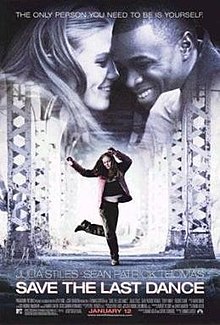
3.     You know what? Derek and I like each other and if you have a problem with that, then screw you.” –Sarah Saved the Last Dance


4.     What would the world be like if there were no mixed races? How many people would be non-existent in your life if that were the case?


5.     “Whenever I passed the white women looked at me, some curiously, some coyly, some with open hostility.”


6.      “‘That book proved to me that the intermingling of the races in sexual relationship was sapping the vitality of the Negro race and, in fact, was slowly but surely exterminating the race. It demonstrated that the fourth generation of the children born of intermarrying mulattoes were invariably sterile or woefully lacking in vital force. It asserted that only in the most rare instances were children born of this fourth generation and in no case did such children reach maturity.’”


7.      “‘If miscegenation is in reality destroying us, dedicate your soul to the work of separating the white and colored races. Do not let them intermingle. Erect moral barriers to separate them. If you fail in this, make the separation physical; lead our people forth from this accursed land. Do this and I shall not have died in vain.’”


8.     “‘Every half-breed, or for that, every person having a tinge of Negro blood, the white people cast off. We receive the cast off with open arms and he comes to us with his devitalizing power. Thus, the white man was slowly exterminating us and our total extinction was but a short period of time distant.”’

      9.


10.     Miscegenation

In 1965 my parents broke two laws of Mississippi;
they went to Ohio to marry, returned to Mississippi.


They crossed the river into Cincinnati, a city whose name
begins with a sound like sin, the sound of wrong - mis in Mississippi.


A year later they moved to Canada, followed a route the same
as slaves, the train slicing the white glaze of winter, leaving Mississippi.


Faulkner's Joe Christmas was born in winter, like Jesus, given his name
for the day he was left at the orphanage, his race unknown in Mississippi.


My father was reading War and Peace when he gave me my name.
I was born near Easter, 1966, in Mississippi.


When I turned 33 my father said, It's your Jesus year - you're the same
age he was when he died. It was spring, the hills green in Mississippi.


I know more than Joe Christmas did. Natasha is a Russian name -
though I'm not; it means Christmas child, even in Mississippi.


11.     “My first step was to solemnly pledge God to never marry a mulatto man. My next resolve was to part in every honorable way all courting couples of mulatto people that I could. My other and greatest task was to persuade the evil women of my race to cease their criminal conduct with white men and I went about pleading with them upon my knees to desist. I pointed out that such a course was wrong before God and was rapidly destroying the Negro race”


12.     “I had to choose between you and my race.”


13.     “No matter what the white folks did to me, or made me do just in order to live, Alice and I could have a life of our own, inside of all the pressure, away from it, separate from it, that no white person could ever touch.”


14.     “If miscegenation is in reality destroying us, dedicate your soul to the work of separating the white and colored races. Do not let them intermingle.”

15.

             Without Miscegenation I wouldn't be here today <3


16.     Miscegenation is a mixture between people of different racial backgrounds. Although the fear of Miscegenation was predominately seen in the mixture of African American’s and White American’s there are various other ethnicity mixes that developed fear of mixing races. Throughout the course of our readings I have grappled with the issue of not loving someone for who they are and can’t even fully imagine how things were back before the mid 21st century.


Attributions

1.     Publisher: Bromley and Co.


2.     Chester Himes If He Hollers Let Him Go (19)

3.     Save The Last Dance –Sarah

4.     Atalia Jones

5.     Chester Himes If He Hollers Let Him Go (18)

6.     Imperium In Imperio 84

7.     Imperium In Imperio 85

8.     Imperium In Imperio 84

9.     Save The Last Dance

10.  Natasha Trethewey's

11.  Imperium in Imperio 84

12.  Imperium in Imperio 85

13.  Chester Himes If He Hollers Let Him Go 169

14.  Imperium in Imperio 85

15.  Atalia Jones

16.  Atalia Jones


Personal Statement

My inspiration to construct a mash-up focusing on miscegenation derived from my ethnic background paralleling to the definition itself. As we discuss into further texts the concept of being mulatto seems to structure significantly throughout various texts. Being that the term “mulatto” stems from miscegenation I felt it would be interesting to explore the theme that is so commonly exemplified. As I used Google to find images I came across the “Miscegenation Ball of 1864” which in all reality did not happen but I found this picture to be the most interesting because it depicts a reverse meaning of what the fear of miscegenation was back then. Primarily miscegenation was the fear of intermingling of the black and the white but more specifically the black man and white women. This picture illustrates the exact opposite showing the white men and black woman which could maybe symbolize the slave masters and their slaves. I also included a poem by Natasha Tretheway which goes forth to explore the illegal experiences her parents faced marrying outside of Mississippi since miscegenation was not allowed.  Her mother was black and her father white. The second law that was broken was Natasha herself as she was of mixed blood and often mistaken for just white. The significance of this poem focuses on her inability to fully understand her background, not knowing which side to identify as. Natasha’s comparison to Faulkner’s Joe Christmas occurs because he too was of mixed races and had difficulty identifying himself because he was stripped from his ancestry.  I enjoyed this poem because I can relate to how Natasha grew up. Similar to her my skin was light and I could pass for white. Also because my skin was so light I did not really understand for the longest the difference between being white and black. I knew my dad was black and my mom was white but the logistics didn’t matter to me until I started to get picked on in school and called redbone, white girl, yellow skin, and light-bright.


Thursday, June 28, 2012

Imperium in Imperio


"De greatest t'ing in de wul is edification. Ef our race ken git dat we ken git ebery t'ing else. Dat is de key. Get de key an' yer ken go in de house to go whare you please." (Griggs 18)


I chose this quote one because the significance of Education is going to be a reoccurring theme in the passages we continue to read and also asa visual for the lack of education that is present within this time. Within reading this quote itself one can recognize that the preacher did not obtain a proper education by the looks of the way he talks as well as how he would write those words. Education stands for one of the strongest benefits needed in order to be successful or move towards success. Coinciding with Education is the significance of race because throughout this novel in how the color of your skin plays part into how you are treated by your professors, community members, etc, and where you can get a job. "It is true that there were positions around by the thousands which he could fill, but his color debarred him" (Griggs 64). Belton's ascribed characteristics hold him back countless times for obtaining a job. His intellect also has no importance in representing him as a person. The focus lays specifically on the color of his skin and because he is black he is put at a disadvantage regardless of his intellectual abilities.


This notion of rebellion also plays a large role between Belton and Bernard as they compete for excellence almost seeming like a battle between races since Belton is black and Bernard has lighter skin (which back in this day he could in some cases pass for white). However, the greater rebellion is against the whites, fighting for equality and power to be seen at the same level as the whites.


"If miscegenation is in reality destroying us, dedicate your soul to the works of separating the whites and colored races" (Griggs 85) The problem with miscegenation is rooted within the whites having fear of equality between races coming and with the blacks it's a fear of black extinction occurring with the amount of interracial babies being born. The fear of losing one's cultural identity is an upbringing problem for both races. Viola pisses me off because of her ignorance and inability to love Bernard for him and not the color of his skin!!! And then she signs the letter, "Your loving wife" when in the previous chapter claims that she could never be his wife. She is so torn between races that it ultimately drives her to suicide not being able to face reality.


1) Griggs portrays an overpowering feeling of Belton being prevented from obtaining a job on page 64, due to his skin color. Where else in this book do we see Belton being at a disadvantage because of his race? Do you feel as if race has an impact in jobs today or have we become more diverse?


2) What significance did the mulatto play in this time? What can analyze about the letter Viola leaves Bernard? What does this say about miscegenation?

Thursday, June 21, 2012

Narrative of Fredrick Douglass


One passage that stuck out to me in reading this Narrative was on page 52 when Covey goes to fetch multiple switches to beat Douglass with, "He then went to large gum-tree, and with his axe cut three large switches, and, after trimming them up nearly with his pocket-knife, he ordered me to take my clothes off". This section took me back to a time when I would go down south to Georgia to visit my family on my dad's side. When my siblings, cousins or I acted out we were sent to the backyard to get a switch that would soon get taken to our behinds for 2 lashes. I never really thought about it at the time (being that I was younger than 10 years old) but coming across this passage made me question why my family still uses switches for punishment. The relation of a switch goes back to slavery as it was a common form of punishment. Being that I am half black and my relatives on my dad's side are full black, I am puzzled as to why they would continue to use a switch as it symbolizes a brutal historical punishment that our ancestors had first-hand experience of being slaves.


The definition of humanity is significantly eliminated throughout the course of this Narrative. African American’s are excluded from being considered human with their contribution remaining only for slave work. Douglass calls to attention various instances that more so question White American’s being human. With vivid illustration he shows the ability for slave master Gore to contain no shame in killing and severely injuring slaves, “A thrill of horror flashed through every soul upon the plantation, excepting Mr. Gore. He alone stood cool and collected” (20). Since slaves had no rights, this massive murder of Demby went unannounced to the judicial court marking not only the insanity of getting away with murder but the poor human like characteristics of Gore. The slave masters rightfully give a bad name to what humanity stands for.


1) Throughout Douglass’ encounters with various slave masters why were slaves punished so severely? Do you think the threat of slaves becoming powerful/educated play a role in this punishment?


2) Why might people in the south still use switches to discipline their children?


3) What are some examples of the immoralities of slavery that did not involve physical cruelty? What is the significance in Douglass vividly illustrating these slave abuse themes?